

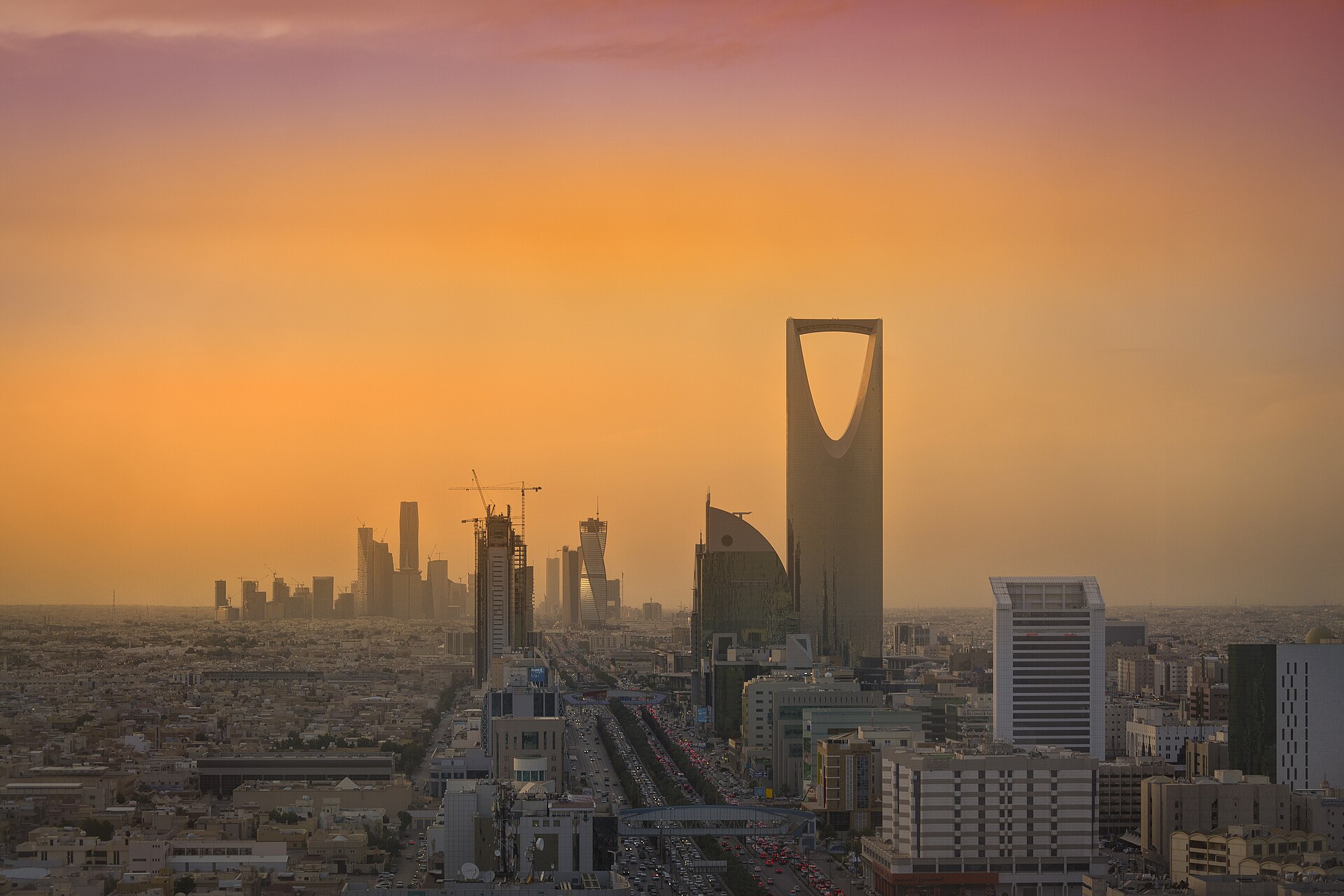
The Gulf’s economic story of this decade is an audacious attempt to outrun geology. Saudi Arabia’s Vision 2030, the UAE’s competing hub strategies and Qatar’s post-World-Cup plans all pursue the same destination by different roads: economies in which oil pays for the transition but no longer dictates the outcome. Non-oil growth now leads the region’s headline numbers, and the skylines — cranes over Riyadh, new districts in Doha and Dubai — advertise the ambition before the statistics confirm it.
The stakes are demographic as much as financial. Gulf states must create millions of private-sector jobs for young citizens, and hydrocarbon employment cannot supply them. Assessments by the IMF credit the reform programmes with real momentum — rising female labour participation in Saudi Arabia is among the fastest social-economic shifts anywhere — while warning that the transformation’s depth will be tested when oil revenue falls rather than rises. Saudi Arabia Magazine tracks that test as it unfolds.
What Diversification Looks Like on the Ground
The visible layer is the giga-projects: NEOM’s linear city and Red Sea resorts, new financial districts, entertainment cities and sports investments crowned by a World Cup. Beneath the spectacle sits the structural layer that economists watch more closely: capital-market deepening that has made Riyadh’s exchange a top-ten global venue by value, a start-up ecosystem funded by sovereign vehicles, logistics and manufacturing strategies targeting supply chains between Asia and Europe, and tourism liberalisation that has turned the Kingdom into a growth market for global hospitality brands.
The UAE’s head start supplies both model and competition. Dubai’s economy is already overwhelmingly non-oil, built on trade, finance, tourism and property sold to the world; Abu Dhabi is deploying its hydrocarbon wealth into technology, AI infrastructure and global finance at sovereign scale. Regional rivalry between the Gulf capitals — for headquarters, talent, listings and events — has become one of diversification’s engines, as our Global News coverage documents.
The Hard Parts
Diversification’s obstacles are the classic ones of rentier economies, now being confronted at speed. Private sectors accustomed to state spending must learn to grow without it; education systems must produce the engineers, managers and researchers the new sectors need; and the non-oil economy’s true independence is hard to measure while oil-funded government expenditure still drives demand through it. The IMF’s regular assessments make exactly this point: non-oil growth financed by oil is a bridge, and the far shore is private activity that survives a low oil price.
External risks compound the domestic ones. The new sectors — tourism, technology, entertainment, finance — are exposed to regional security shocks, global capital conditions and competition from every other ambitious hub from Singapore to Mumbai. And the energy transition itself is double-edged: it motivates diversification while eventually eroding the revenue that funds it, a race between two curves that defines Gulf economic policy for a generation.
How the Story Ends — or Doesn’t
There will be no single moment when the Gulf declares itself diversified; the transition is a gradient, and by the most meaningful measures — non-oil exports, private employment of citizens, non-oil fiscal revenue — the gradient is moving the right way at historically unusual speed. The sovereign wealth funds, now among the largest investors on earth, ensure the region shapes the global economy whatever happens: in AI data centres, football, mining and finance, Gulf capital is already a price-maker.
For the world, a successfully diversifying Gulf is a different partner: a source of investment and demand less correlated with the oil cycle, a logistics and technology hinge between continents, and a test case other resource economies study for transferable lessons. The oil age built these states; the question of the decade is what they are building with it — and the construction, literal and economic, is proceeding at a pace that makes standing still the riskiest strategy of all. More regional analysis is on the Saudi Arabia Magazine homepage.
