

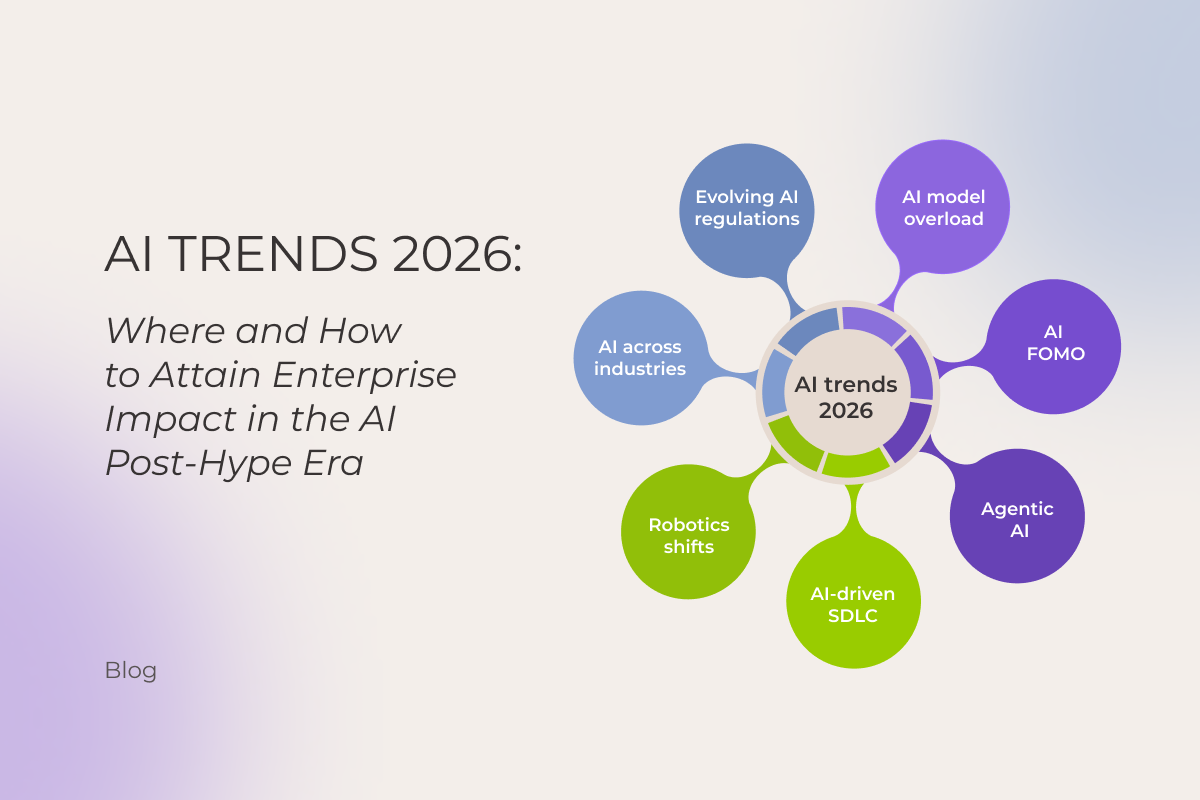
Artificial Intelligence is evolving faster in 2026 than at any point in history, reshaping industries, jobs, and daily life in ways many people still do not fully understand. While most discussions focus on surface-level innovations like chatbots and automation tools, the real transformation is happening deeper inside AI systems, where new architectures, hidden limitations, and powerful enterprise shifts are redefining how technology works. In this article, we will explore the latest artificial intelligence trends 2026, including the changes experts rarely highlight, and what these developments truly mean for businesses, workers, and the future of digital intelligence.
AI Industry Shift in 2026: What Is Changing Rapidly
Multimodal AI Evolution and Human-Like Understanding
In 2026, one of the biggest artificial intelligence trends is the rapid growth of multimodal AI systems. These systems are no longer limited to text-based input; they can understand and generate information across text, images, audio, and video simultaneously. This creates a more human-like level of interaction where AI can interpret complex real-world scenarios instead of isolated data. The shift is important because it improves accuracy, context awareness, and usability in industries like healthcare, education, and media. Businesses are now integrating multimodal AI into customer support, design workflows, and analytics systems to create faster and more intelligent decision-making processes. However, this also increases complexity, requiring more computing power and better data training techniques to maintain reliability.
Rise of Autonomous Agentic AI Systems
Another major trend in 2026 is the rise of agentic AI systems—AI models that can independently perform tasks, make decisions, and complete workflows without constant human instructions. Unlike traditional automation tools, these systems can break down goals into steps and execute them intelligently. This is transforming industries such as marketing, finance, and software development, where repetitive tasks are now handled end-to-end by AI agents. The real shift lies in autonomy, as businesses begin to rely on AI not just for assistance but for execution. However, this raises concerns about control, accuracy, and accountability, especially when AI systems operate with minimal supervision. Experts believe this is one of the most disruptive yet under-discussed AI changes in 2026.
Enterprise Automation Transformation Across Industries
Enterprise-level automation is undergoing a major transformation due to advanced AI integration. In 2026, companies are moving beyond simple task automation toward fully integrated intelligent systems that manage entire business processes. From supply chain optimization to customer experience management, AI is now embedded at every operational layer. This trend is reducing operational costs while increasing efficiency and scalability. However, the shift also requires companies to restructure their workforce and retrain employees to work alongside AI systems. Many organizations are quietly investing in AI-first infrastructure to stay competitive, even though public discussions often underestimate how deeply automation is reshaping modern business models.
Hidden AI Trends Experts Rarely Discuss Publicly
Data Scarcity and Growing Dependence on Synthetic Data
One of the less discussed challenges in artificial intelligence trends 2026 is the growing issue of data scarcity. As AI models become more advanced, they require massive and diverse datasets to maintain performance. However, real-world data is becoming harder to collect due to privacy laws, ethical concerns, and limited availability. To solve this, companies are increasingly using synthetic data—artificially generated datasets that simulate real-world conditions. While this approach helps train models at scale, it also introduces risks related to accuracy and bias. If synthetic data does not accurately reflect reality, AI systems may produce flawed outputs. This hidden dependency is becoming a major concern among researchers and industry experts.
Energy Consumption and AI Infrastructure Pressure
Another overlooked trend is the massive energy consumption required to run modern AI systems. As models become larger and more complex, the computational power needed to train and deploy them increases significantly. This has created pressure on global data centers and cloud infrastructure, leading to higher operational costs and environmental concerns. In 2026, companies are investing heavily in energy-efficient AI chips and optimized algorithms to reduce power usage. However, the demand for AI services continues to grow faster than efficiency improvements. This imbalance is one of the critical challenges shaping the future of artificial intelligence but is often not widely discussed in mainstream conversations.
Regulation and Compliance Reshaping AI Development
Governments and regulatory bodies are playing a much stronger role in shaping artificial intelligence in 2026. New laws and compliance frameworks are being introduced to ensure transparency, data protection, and ethical usage of AI systems. This is forcing companies to redesign their AI models with stricter safety guidelines and documentation processes. While regulation improves trust and safety, it also slows down innovation in some areas. Many AI developers are now spending more time ensuring compliance than building new features. This hidden shift is significantly influencing how quickly AI technologies reach the market, even though it is not always visible to end users.
Future Impact of AI Trends on Businesses and Society
Transformation of Job Roles and Workforce Structure
Artificial intelligence is significantly changing the global job market in 2026. Instead of simply replacing jobs, AI is transforming how work is done across industries. Many repetitive and manual tasks are now automated, allowing employees to focus on strategic and creative responsibilities. However, this shift also requires workers to develop new skills such as AI management, data interpretation, and digital collaboration. Companies are increasingly hiring employees who can work alongside AI systems rather than compete with them. While some roles are disappearing, new opportunities are emerging in AI development, prompt engineering, and system supervision, making adaptability the most important skill in the modern workforce.
Personalization and Changing Consumer Behavior
AI-driven personalization has reached a new level in 2026, influencing how consumers interact with digital platforms. Businesses now use advanced AI algorithms to analyze user behavior, preferences, and engagement patterns in real time. This allows companies to deliver highly customized content, product recommendations, and services. As a result, consumer expectations have increased significantly, with users now expecting instant, relevant, and personalized experiences. However, this level of personalization also raises concerns about privacy and data usage. Many users are unaware of how much data is being analyzed behind the scenes, making transparency a growing issue in digital ecosystems.
Security Risks and Ethical Challenges in AI Systems
As artificial intelligence becomes more powerful, security risks and ethical challenges are also increasing. In 2026, AI systems are being used not only for innovation but also in cyber threats, including deepfake generation, automated hacking attempts, and misinformation campaigns. This creates a complex environment where AI is both a solution and a risk. Companies are investing heavily in AI security systems to detect and prevent malicious activities. At the same time, ethical concerns around bias, transparency, and decision-making accountability are becoming more serious. Ensuring responsible AI usage is now a top priority for governments and organizations worldwide.
FAQs
1. What are the latest artificial intelligence trends in 2026?
AI trends in 2026 include multimodal systems, autonomous AI agents, and enterprise-level automation.
2. How is AI changing businesses in 2026?
AI is improving efficiency, reducing costs, and transforming job roles through automation and intelligent systems.
3. What is agentic AI?
Agentic AI refers to systems that can independently plan and complete tasks with minimal human input.
4. What are the biggest risks of AI in 2026?
The main risks include data privacy issues, security threats, bias, and ethical challenges.
5. Will AI replace human jobs completely?
No, AI is more likely to transform jobs rather than fully replace them, creating new opportunities.
Conclusion
The latest artificial intelligence trends 2026 show that AI is no longer just a supporting technology but a core driver of global transformation. From autonomous systems to multimodal intelligence and enterprise automation, AI is reshaping how industries operate and how people interact with technology. While the opportunities are massive, challenges like data privacy, energy consumption, and ethical risks cannot be ignored. The future of AI will depend on how responsibly and intelligently it is developed and used, making awareness and adaptability essential for everyone in the digital world.